

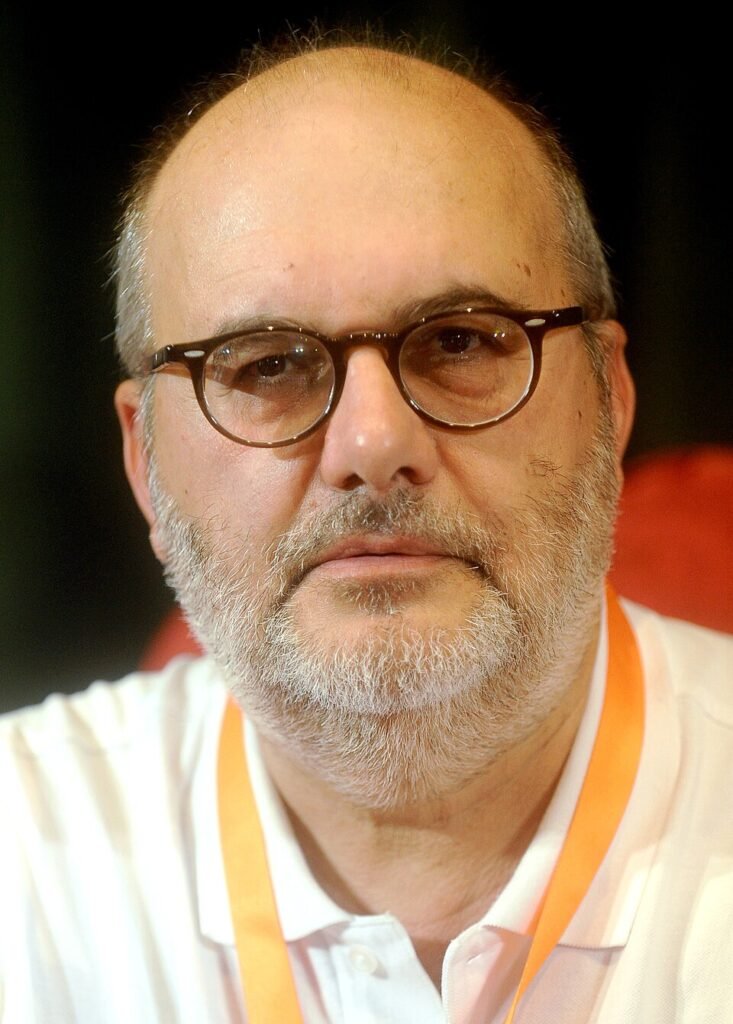

Editors' note: This is a transcript of our “Political Science Podcast” hosted by Marko Grdešić with Branko Milanović. The conversation took place on April 22nd 2026. Branko Milanović is a research professor at the Stone Center for Socio-Economic Inequality at the City University New York, USA.
Marko Grdešić:
Professor Milanović, thank you for joining us on the “Political Science Podcast.” There are plenty of reasons to talk, but we will focus on two of your recent books. One is Visions of Inequalityand the other is The Great Global Transformation. But, to start, let's go back to your very famous “elephant graph” that summarizes the last 20, 30 years of so-called neoliberal globalization and the main trends related to inequality, which happened during that period. Those trends are quite well known, they concern the stagnation of the working and middle classes in Western countries, the emergence of a new middle class in Asia and, finally, very high income growth among the richest globally. How do you look at that graph of yours today and how, in general, do you look at the evolution of our knowledge about inequality? Is there a good accumulation of our knowledge?
Branko Milanović:
First, thank you very much for inviting me. I am very glad to be here at the Faculty of Political Sciences in Zagreb and of course I am very glad that we will be discussing your book as well. I would like to say, first of all, how much that graph reflects the current situation and if it was significant.
It was significant because it essentially showed the basic, relatively speaking, winners and losers from globalization. As you said, the winners were, in a way, the world's middle class. It is perhaps a bad term because they are not the middle classes according to Western beliefs, or according to Croatian beliefs, because they are much poorer, but they are in the middle of the global income distribution.
And the other big winner was of course the top 1 or maybe top 5 percent. But what was politically very significant was that in some ways the relative losers were the lower parts of the income distribution in developed countries. And let's say, for example, the middle classes of developed countries.
A political problem appeared which I think is interesting. The graph reflects the situation between 1988 and 2008. That was almost 20 years ago. But we see its political effects, I think, only in 2016 with Trump and then of course with other parties that came, populist parties and others in Europe. I think it's interesting that this graph shows the economic situation over a period of 20 years, but then we have the political effects of that graph coming in the following 10 or 15 years. I think that is the significance of that result.
But on the other hand, has that graph changed since then? Yes, it has. If we could now bring it to 2018 or even 2023, what would we see? First of all, China's position has changed. So that center, China was in the middle, now it's going more towards higher incomes. Even if everything were the same, the graph would not look the same. Because of course the positions of countries and people change.
And this is obvious, China and Asia have continued to grow. But this peak, that top 1 or 5 percent did not return to the growth rates they had during that time of globalization.
Marko Grdešić:
Thank you. Let's go to your book Visions of Inequality. In it you deal with different economists who have written about inequality in different ways. One of your chapters also deals with the period after the Second World War, during the Cold War, when relatively few economists dealt with the phenomenon of inequality. Why is this the case, if we know that this was also a period when the distribution became compressed and inequality was reduced?
Branko Milanović:
Yes, I think one of the reasons why less was written is that the problem of inequality was thought to be solved, in quotation marks. An important author at that time was Simon Kuznets. Kuznets was a Russian-American author who lived and wrote in America. That was during the 1950s when America produced about 40 percent of the world's gross domestic product and was by far the richest country. The average American income was 5.5 times higher than the average income in the world.
Second, the American rate of growth was still high, it was not a huge rate, it was about 2 or 3 percent. Third, American inequality had declined significantly. In the book I mention Arthur Burns who was the head of the National Bureau of Economic Research. He wrote to Simon Kuznets saying that the share of the richest 5 percent had decreased by one third in the last 20 years. Which means that we have gone one third of the way to a theoretical equalization of incomes. Part of the reason for ignoring inequality was the belief that it was a problem that developed countries were somehow solving. And of course, the Kuznets curve, as you know, shows that inequality increases in the first period of development, then reaches a peak and then begins to fall, when the country becomes more developed.
But there is also another element that I mentioned and that you know, of course, and I think that was a political element. There was a desire to show that if the Soviet Union or Eastern Europe had no classes, neither did America. Because everyone can achieve a large income, regardless of their starting position. So I think there was a desire to forget class analysis, which is always linked to inequality, to set it aside.
Marko Grdešić:
In your book Visions of Inequality , you deal with various authors. You mentioned Kuznets, but there are other interesting authors like François Quesnay, Adam Smith, Karl Marx, Vilfredo Pareto. Is there one that you would single out as especially useful for us today, for understanding our current problems?
Branko Milanović:
I think they are all useful in a way. I will say why in two or three sentences.
First, I think Adam Smith is crucial. When reading The Wealth of Nations, and also The Theory of Moral Sentiments, there are a lot of elements related to inequality. Not in the current sense that you have the word “inequality,” but they are about how the rich got their wealth. And Smith is very critical about that.
Open robbery, colonialism, collusion, when economic elites agree on a monopoly, when they take political power. All of this is described so critically at times that it seems to me that Smith is more critical of capitalists than Marx. Although they were not yet called capitalists, Smith called them masters or employers. Therefore, I think Smith is very relevant for us. And he is relevant in that he argued that the hallmark of successful societies is the relative wealth of the working and middle classes. This is something new, because as you know, the wealth of the state and the king was important for the mercantilists, not the middle class.
Marx is very relevant, I think, given his analysis of capitalism and some of the similarities that exist between the movement of the rate of profit or the rate of interest and the average rate of growth. It is similar to what you can find in Piketty. Piketty didn't know Marx when he wrote, but when I teach it or when I talked to him afterwards, there are similarities. Of course, Marx has this tendency of the profit rate to fall. With Piketty the profit rate is fixed, more or less. That is very interesting.
And I think Kuznets is relevant, as I said a little earlier. And I would say at the end that Pareto is relevant because of his theory of elites. Because now we have a type of elite in developed countries that is no longer perhaps so class-oriented, but perhaps is more compatible with Pareto. A combination of Pareto and Marx would be welcome.
Marko Grdešić:
However, there is no Keynes among the economists you discuss. Why?
Branko Milanović:
That is a very good question, a very difficult question. I had to answer it and wrote a short essay for Substack entitled “Why not Keynes?” And it is true, there are arguments for and against including him.
What was my argument? I thought a lot about whether to include him or not and I decided not to include him. The argument was that for Keynes, inequality appeared from time to time, but it was not the defining problem. I singled out one negative reason why I excluded Keynes.
He had a completely open door to write about inequality. When he talks about the lack of aggregate demand and when he says that the marginal propensity to consume decreases with income, then it is obvious that the solution is income redistribution. It means giving more income to the poor and less to the rich and increasing aggregate demand.
I think that he did not want to do this for political reasons. I think that he was afraid of being compared to John Hobson and being in that theory of so-called under-consumptionism. Regarding that theory, he wrote in The General Theory that this theory is the underworld of economics. Then he went in the other direction, to say that if aggregate demand is insufficient, then we have the state.
So, we will increase what we economists write as "G", government, we will increase aggregate demand. So that was a negative reason. In the sense that he did not want to deal with it. I have to say that there is an article, a very interesting, long article in which the author criticizes me. And there are arguments that perhaps I should have included Keynes. So, I'm somewhere between 55 to 45 percent for not including him, somewhere like that.
Marko Grdešić:
Let's move on to your book The Great Global Transformation. One thing that is very interesting to more or less everyone is the phenomenon of “homoploutia.” Can you explain what this term covers and why it is relevant?
Branko Milanović:
First, I would like to give a definition, to be clear if possible. So, if we take the peak of the 10 percent of the richest people in terms of income in developed countries, and specifically the highest in America, then a strange phenomenon can be observed from a Marxist point of view, and even from a neoliberal or neoclassical point of view.
This is the phenomenon that there is an increased share in that group of the richest who are at the same time in the richest decile in terms of capital income, they are capitalists because they receive income from interest, dividends, rents, and on the other hand, these same people are among the 10 percent of the richest or most successful in terms of labor income. That is key. This is very difficult to explain to a very Marxist person who believes that today's capitalism is the same as classical capitalism. How is it possible that the richest workers are the richest capitalists at the same time?
I should make a distinction here. First, we see this empirically. What I am saying now is a fact that is not only valid for America but also for all Western countries. This is established, but of course it does not apply to countries that are less developed such as Brazil, Peru, Mexico and so on. Therefore, it is a fact. Now what is the explanation and what are the political implications of this phenomenon, that is an important matter, you will probably know much better. And it is a very new phenomenon so there is not much research on it. I know so far that there is only one paper at the University of Amsterdam that deals with it. Which deals with the question of what are the characteristics of people who are “homoplutocrats.” How old are they, what is their genesis, is it inherited property and you became highly paid or maybe you were highly paid and then you saved and became a capitalist in 50 years.
Marko Grdešić:
But these will be people who work very hard, long working days and they will think that they have earned their wealth. This will also be one component that will be politically relevant.
Branko Milanović:
Absolutely, it's a matter of meritocracy. Of course, meritocracy has been and is being written about. Because it is interesting, it is a new meritocracy. Daniel Markovits wrote about it. He says they have old-fashioned virtues. And the old-fashioned virtues are work, success. So, Calvinist values. And then, those who failed, they are seen as having certain moral deficiencies. They are either lazy or not intelligent and so on. And then this leads to the problem that Markovits wrote about. This leads to polarization, especially in America. It's not just income polarization, it's cultural as well. And what you said is part of that cultural polarization. Because if they don't work 70 hours a week, how can they justify their wealth? And they, I think, in a way consciously suppress that a significant part of their income comes from capital.
Marko Grdešić:
In your book The Great Global Transformation there is a whole range of topics, we can't cover them all. But there is one topic I would like to discuss. You talk about different theories of imperialism, so you return to some theories of Lenin, Hobson, Rosa Luxemburg. But Joseph Schumpeter is also interesting. You go back to these theories, because economists don't really have a good theory of imperialism, although they are often accused of acting in an imperialist way towards other disciplines, which is interesting. But Schumpeter was interesting because this is not commonly talked about. We all more or less know what Lenin or Rosa Luxemburg said and wrote, but Schumpeter's theory is actually quite similar. So can you tell us a little bit about that? Did he know that he was borrowing from them and relying on them?
Branko Milanović:
No, he knew. He is perhaps the most educated economist of the twentieth century, in terms of economic knowledge. Schumpeter's first theory is interesting. I think it was in 1918 or 1920. He considered imperialism to be an archaic way of behaving which is completely foreign to capitalism. And why do wars and imperialism occur? Because there are certain old-fashioned circles. He said that imperialism is an aimless conflict, it means enslaving someone, but without any particular goal, without any economic sense. But interestingly, in his 1942 book Capitalism, Socialism and Democracy, he has a different belief. He believes that when there is a great concentration of capital power, when large companies are formed, large conglomerates, then they are in search, like in Hobson and Lenin, of raw materials, of labor, of markets. They start using the state and the state uses them. And that theory is not only close to Hobson's theory, but interestingly Schumpeter claims in that book that the normal modus operandi of capitalism is actually monopoly capitalism. As you know, this is because it is more dynamic and efficient than ordinary capitalism which is statically efficient. When you put it all together, you get the conclusion that Schumpeter claims that the normal modus operandi of capitalism is actually monopoly capitalism, and that monopoly capitalism is connected according to him with the imperial role of the state. And you come to a very interesting conclusion that he came very close to the theory of Hobson, Rosa Luxemburg and Lenin.
Marko Grdešić:
Thank you. In your book, but also in your other comments, you often mention how China, even though it has become politically and economically relevant now, does not have any ideological appeal. Their ideas are not interesting in the same way, they don't export their model directly like the Soviet Union did. However, is that really the case? Recently, there is a phenomenon where young people in the West are turning to China, they are fascinated by China, this is called “Chinamaxxing.” People on Instagram and Tik Tok drink tea and wear slippers. There is a new fascination with China. And more broadly, China is efficient, rational, they have infrastructure, it is predictable. And what we see in America is the complete opposite. So how do you look at this? Maybe something is happening after all?
Branko Milanović:
That's an excellent question. You know what, I have two answers to that.
First, I think that China has failed to define something equivalent to the “Washington Consensus” or the Soviet way of managing the economy. Imagine a situation where you are a Chinese adviser going to Tanzania or Burma. And they ask you what to do. If you are within the “Washington Consensus”, you tell them what the ten rules are. I think those rules are clear. They may not be the best, but they are clear. China has no such rules.
I have talked a lot with Chinese economists. China developed through a bunch of confluences and circumstances, so called contingencycases. It is very difficult to put all of that into a general framework. And China has a problem, perhaps because of the way it developed, to construct this framework in an abstract way. Their experience should be of an abstract character so that it can be applicable for others.
And there is another part, I will be very brief. I think that's very interesting. I do not know much about this, but I have started to learn. And that is the so-called policy that Xi Jinping and the Communist Party are now implementing, and that is the policy of making Marxism more Chinese. I think that is very significant, because an eclectic combination appears. On the one hand, there is a European theory that is based on the Enlightenment, so Marx as a continuation of Hegel and Kant. On the other side is Confucianism and legalism. And that is very interesting. And I think that it is often difficult to understand, but it is a policy that should, according to what the ideologues of the party say, harmonize the experiences of China and put them in one environment, one ideology that would be understandable not only to China, but also to Europeans. It is possible that some kind of new ideology will be formed. In that case, we could take some elements of traditional Chinese philosophy about which we know very little.
Marko Grdešić:
We are coming towards the end, so let's return once more to the phenomenon of inequality. It is obviously very relevant and will be relevant in the 21st century. What is to be done? What are some solutions and what are some taxes that we should try? There is a lot of talk about new progressive taxes, whether we are talking about wealth or something else. What can taxes do, what can't they do? What else should we try?
Branko Milanović:
I am not a big supporter of solving every problem with taxes. At times I don't like this. Let's say the Paris school does that a lot. Whenever there is a problem, here you go, let's tax it. But specifically, Gabriel Zucman proposed a tax on great wealth and I think it's a good move. First of all, it secures some money and that is certainly significant, but not that significant. I think it is a pedagogical tax. At some point it is necessary from a social point of view to say that some levels of wealth are absolutely unacceptable. And that the use of that wealth is toxic, if we talk about the influence on the press and the media and politics. And if they want to be in that business, I think they should be taxed at extremely high rates. So, if you want to be the owner of the Washington Post like Jeff Bezos, fine. But then you have to pay an annual tax of 3 billion dollars.
Because that's the way to prevent what they're obviously doing, which is to take over the media entirely. When you look at the media, all of it is owned by them, the richest people. In this way, they influence the creation of public opinion and then directly finance politicians and political parties. So they just control everything.
At first, I was skeptical of Zucman's tax, but then I saw that it might begin to stop the trend which, in my opinion, is extremely dangerous. And it's a trend both in those countries and here, or in parts of Eastern Europe, that you have people who have accumulated great power, they control the media, they control non-governmental organizations. Because it is a way to launder dirty money. This is a very common situation. And to these things, I think, society as such must react.
Marko Grdešić:
We are at the very end so I wanted to ask you what you are working on now and what are some problems that are interesting to you that you would like to work on?
Branko Milanović:
This last book The Great Global Transformation was written relatively quickly. I used some of my previous works on homoploutia, which you mentioned. So there are no special new ideas now. I have a paper that is new and interesting to me. It is a paper on the distribution of income from capital, but cash income from capital, in the world. And that means interest, rents, dividends. And what's amazing is that that income, if you look at cash income from property, is terribly concentrated. There is no Gini coefficient that is below 90. Or to give you another example, the median income of such ownership in America is 21 dollars per capita per year. That is the median income. And you can imagine what the income is like at the top, the top percentiles, it is measured in billions.
Marko Grdešić:
Professor Milanović, thank you very much.
Branko Milanović:
Thank you very much for this, for the invitation and I am very glad that I am in Zagreb and that we had the opportunity to talk.
Marko Grdešić:
Great, thank you.

