

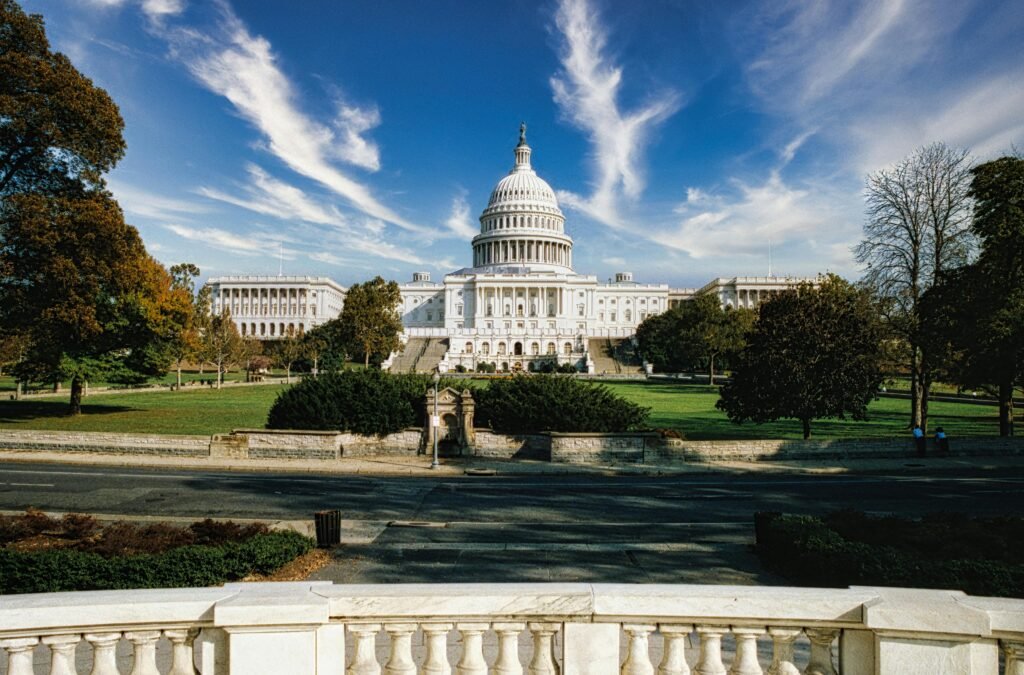

The United States redistributes seats in the US House of Representatives every ten years, based on the US census. The number of seats in the House of Representatives has been fixed since 1929, when the number of representatives was capped at 435. Since then, seats have been redistributed according to a state’s population after each census. States are entitled to at least one representative, while the remaining seats are distributed according to the Huntington-Hill method. Also known as the equal-proportion method, this method allocates the remaining seats to the states according to their population, in a way that benefits states with smaller populations.
The most recent redistricting was conducted in 2023 based on the 2020 census and was applied in the 2024 elections. In that year’s reapportionment, California lost one seat for the first time in US history due to a significant population decrease in recent years. However, it remained the state with the largest number of representatives – 52. On the other hand, Texas had the largest population increase, gaining two new representatives and it now has 38. All representatives are elected in single-member electoral districts. Furthermore, in states that are entitled to only one representative, the entire state is a single electoral unit (at-large districts).
After each census, the United States Census Bureau determines the number of representatives for the states and notifies them of any changes in the number of seats. The states then begin the process of drawing new district boundaries, during which they are free to choose a model of redistricting. Half of the states leave the drawing of electoral districts to their legislatures, subject to governor’s approval. The second most common method is the creation of independent commissions, whose goal is to prevent party influence on the creation of districts. The process of creating electoral districts is often influenced by gerrymandering, i.e., the deliberate, biased tailoring of boundaries to give a particular political party an advantage. Racial gerrymandering, in which electoral districts are created in order to prevent certain racial minorities from being represented, is also a frequent phenomenon.
In the 2024 US House of Representatives elections, Republicans maintained a slim majority, winning 220 seats to the Democrats' 215. On the same day, Donald Trump won the presidential election, returning to the White House after four years. Taught by experience from the results of the midterms in 2018, when Democrats won a majority in the House of Representatives and thus prevented the implementation of his legislative agenda, Trump immediately took action upon taking office. Trump maintains a tight grip on the Republican Party and closely monitors the legislative process in the House of Representatives. He often “threatens” Republicans on his social network, Truth Social, that he will endorse their opponents in party primaries if they do not vote in accordance with his expectations. Also, the Republican Party has a record budget for this early pre-election period and party leaders have emphasized that they will not hesitate to spend significant funds to support candidates favored by Trump. It is also important to note that Trump currently enjoys an 84 percent approval rating among Republicans (Brenan 2025), and his endorsement strongly influences Republican voters in party primaries.
Still, neither a huge budget nor Trump's endorsement guarantees victory for any Republican candidate in the midterm elections, especially given that most presidents lose their House majority at midterms. Thus, Trump began pressuring Republican governors to make a controversial move: draw new congressional districts between two censuses. The plan is to abolish the remaining swing districts to maintain a majority in the House of Representatives. The governor of Texas, Greg Abbott, faced the most significant pressure because his state brings most seats to Republicans. Trump also won the state by an average of 9 percent over Democratic candidates in the last three presidential elections (2016, 2020, 2024). Abbott was initially reluctant to take on such a task, believing that the risk was too significant and that it could have negative consequences. Eventually, he bowed to Trump's pressure and pushed a bill through the legislature on new electoral district boundaries. The new map affects five districts represented by Democrats, where the majority of the population is made up of racial minorities.
Missouri and North Carolina have also adopted new congressional maps and other states are still considering their options. One of them is Indiana, where Vice President JD Vance personally traveled to pressure the Republican state legislators. However, not all Republican governors buckled under the pressure. The governor of New Hampshire, a state described as purple (neither strongly Democratic nor Republican), refused to redraw congressional districts before the new census. The height of the political drama surrounding the redistricting process came in mid-November, when a federal court in Texas ruled that the new map was illegal because it constituted racial gerrymandering and banned the new districts from being used in the 2026 election. The final decision in that case will be made by the US Supreme Court.
As every action results in an equal reaction, it did not take long for federal states with Democratic governors to take the same steps. California went the furthest, where Governor Gavin Newsom pushed a new congressional map through a special election. The new map affects five Republican-held congressional districts, making it difficult for incumbents to win. It also decreases the competitiveness of seven swing districts held by Democrats, making them easier to win for the incumbents. In doing so, California nullified all effects of gerrymandering in Texas. Maryland and Virginia also have similar plans, as they announced the redistricting process for 2026. Governor Newsom promised that California's redistricting is only temporary, until the 2030 census. But as the old saying goes: there is nothing more permanent than a temporary solution. Especially one that benefits the person who proposed it.
This kind of interference of the American president in the elections for the House of Representatives is a precedent. For the first time in US history, the president is pressuring state governments to draw new congressional district boundaries without federal legislation (such as the passage of the Voting Rights Act of 1965, which outlawed racial discrimination in voting). Trump will stop at nothing in his second term to ensure absolute control of the federal government and to implement his agenda. History shows that such moves always result in political retaliation from the opposition party. Regardless of which party controls the White House or Congress, the opposition party retaliates as soon as it gets into power. In such a tit-for-tat strategy, there are few winners, but American democracy is always the loser.
References
Brenan, M. (2025). Trump's Approval Rating Drops to 36%, New Second-Term Low. Gallup. 28. studeni 2025. https://news.gallup.com/poll/699221/trump-approval-rating-drops-new-second-term-low.aspx (pristupljeno: 1. prosinca 2025).

